Lebanon 2026: An Economy Without Electricity, Agriculture Without Markets, and a Future the IMF Cannot Forecast
A few days ago, a friend who has worked in Qatar for years called me. She has made up her mind: she is coming back to Lebanon to settle for good. She managed to save, which is more than many can say, but she knows the income she earned there simply will not exist here. She will live on her savings until she finds work, and nobody can tell her when that will be. Her story is not an exception. It is a small portrait of an entire country.
While countries around the world try to shield their economies from the fallout of the Gulf war, Lebanon faces an economic picture almost unique in its failure: a state without a functioning electricity sector, banks unable to finance the economy, farmers who cannot find markets for their produce, a real estate sector losing its vitality, and an IMF unable to produce reliable forecasts for the country through 2031. This is not a passing economic crisis. It is the crisis of an economic model that has lost the means to survive.
The World Bank expects Lebanon's economy to contract by 6.4% in 2026, after growth of 4.2% the year before. What we had begun to recover evaporated within months. The Gulf war did not stay far from us: oil, shipping and insurance prices rose, and with them the cost of everything we import and everything we try to export.
The hardest blow came from where we have always leaned. Remittances from Lebanese working in the Gulf have dropped very sharply, and they are what kept thousands of families on their feet through the years of collapse. As for the diaspora in Europe and the United States, its ties to the country have grown very thin since the security collapse. Our people there no longer see Lebanon as a home awaiting their investment or their summer visit. They see it only through a security lens: a news bulletin, a travel warning, a worried call to family. When a homeland is reduced to a security file, money stops crossing into it.
The second disaster is agriculture. The apple crop alone is around 200,000 tonnes, and when it cannot reach markets, the farmer is not the only one who loses. So do the truck driver, the box maker, the fertilizer dealer, the farm worker and the cold storage owner. A whole chain of livelihoods breaks link by link, while the fruit sits in cold rooms or under the trees.
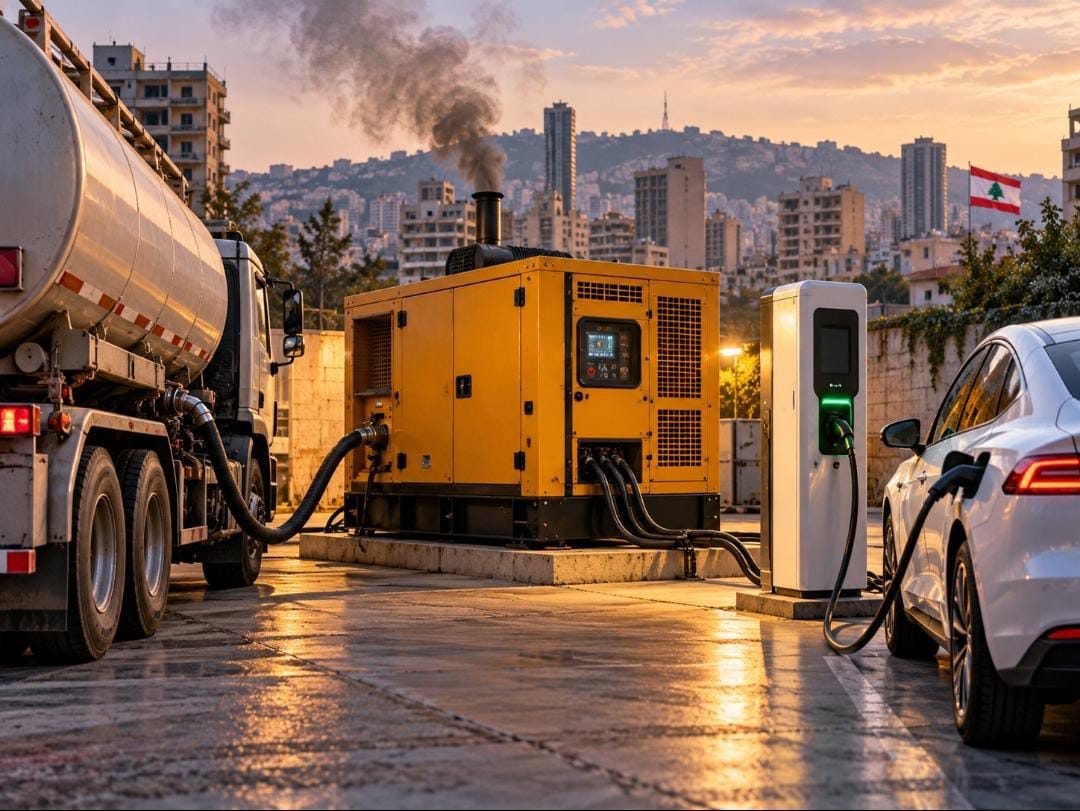
The third disaster is the collapse of electricity. A modern economy cannot be built on diesel generators. Every Lebanese household learns this at the end of each month, when it pays two electricity bills: one to the generator owner, and another to Électricité du Liban, which comes for only a few hours. Two bills for one incomplete service, eating into the employee's salary, the factory's margin and the small shop's ability to hold on. A factory carrying that cost cannot compete with anyone, at home or abroad.
This is why the new Qatari project to build gas fired plants and develop renewable energy truly matters. But the Lebanese have heard many promises before. This time we need clear contracts, verifiable financing, binding deadlines, and real reform of the distribution and billing network. Otherwise we will be building new plants to feed a leaking grid.
Then comes the most telling indicator. In its April 2026 World Economic Outlook, the IMF declined to publish projections for Lebanon for 2026 through 2031, citing an exceptional degree of uncertainty. When the world's leading financial institution cannot draw a line for a country's future, it means the country itself has not settled its basic questions: how to close the financial gap, how to allocate bank losses, when and how deposits will be recovered, and how to restructure public debt. No one can forecast a future its own owners have not decided.
The way forward runs through three priorities that cannot wait: reliable electricity at competitive prices, a productive economy able to export, and a banking system that finances businesses again and protects depositors' rights. These are not slogans. They are the minimum conditions for my friend returning from Qatar to find work, for the emigrant to see in Lebanon an opportunity rather than a risk, and for the farmer to sell his apples.
A state that cannot sell its apples, light its factories, or even measure its losses will not be able to build an economy. Lebanon is rich in potential and poor in management. Lebanon does not need an economic miracle. It needs a state that knows how to run an economy.