The Propaganda of a Clash of Civilizations: Europe's Convenient Scapegoat
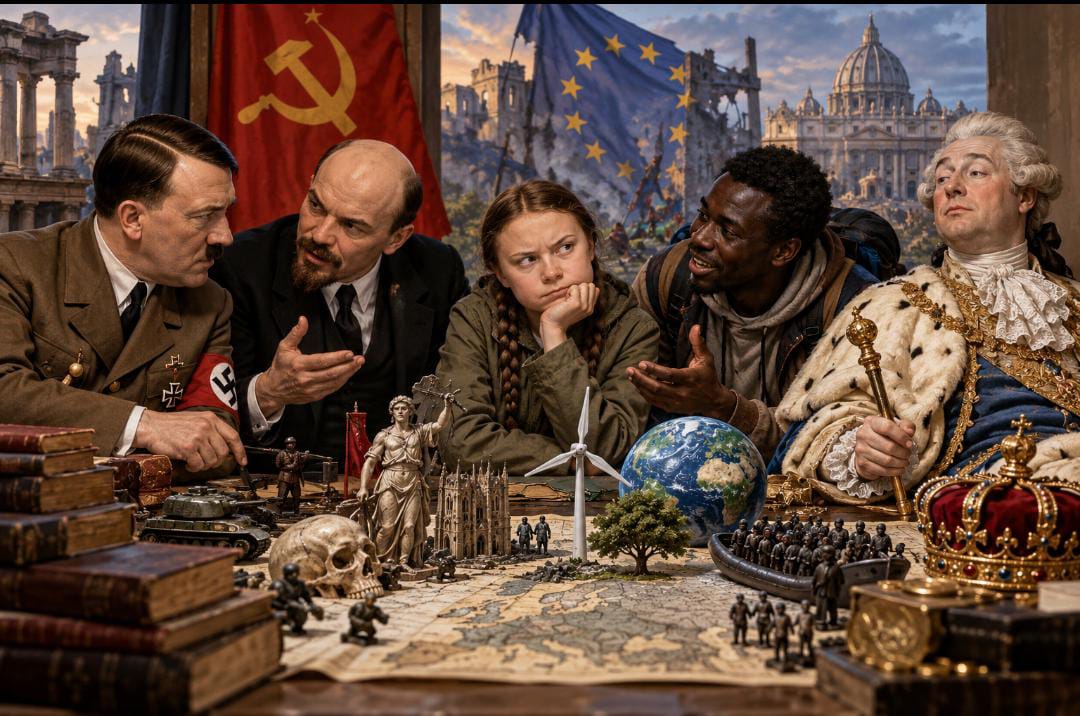
A vast propaganda machine is working tirelessly to build the story of a clash of civilizations, or more precisely, a clash of religions.
In this story, everything that troubles Europe today has one simple cause. Falling birth rates, a stagnant economy, lost competitiveness, swelling bureaucracies and states that interfere more and more in the lives of their citizens are all explained by a single word: immigration. And when this narrative says "immigrants", it usually means Muslims coming from Africa and Asia.
It is a comfortable explanation. It is also a misleading one.
History asks us for some perspective. Europe was never the peaceful paradise that today's nostalgia likes to paint. It was the cradle of colonial empires and of continental wars that devastated entire generations. It gave birth to the two most destructive totalitarian ideologies of the twentieth century, Nazism and Soviet communism. Long before them, the French Revolution had opened deep ideological battles over the state, society and the very source of political authority. None of these tragedies was imported. They were made in Europe, by Europeans.
Today, commentators magnify the riots in Paris, the tensions in Brussels and the immigration debates in Germany. Meanwhile, a far greater European catastrophe is unfolding in Ukraine.
Russians and Ukrainians, two distinct nations who share deep Slavic roots, a long common history and the same Orthodox Christian faith, are destroying one another. Hundreds of thousands have been killed or wounded. Both societies were already facing a serious demographic decline, and now they are burying the very generation that was supposed to carry their future. This is not a clash between civilizations. It is a wound inside European civilization itself.
Can disturbances in some Western European neighbourhoods honestly be placed on the same historical scale?
I do not deny that Europe faces real challenges. Immigration, integration, security and identity are serious questions, and they deserve serious answers, firm where firmness is needed. But they cannot be used to hide decades of structural failure. Europe's economic weakness does not come from mosques. It comes from heavy taxation, rigid labour markets, endless regulation and a political class that has grown used to managing decline instead of reversing it. Its demographic crisis does not come from newcomers. It comes from families who no longer feel they can afford, or are encouraged, to have children.
Blaming the outsider is easier than reforming the state. It spares politicians the hard work of cutting bureaucracy, freeing the economy and restoring the confidence of their own citizens. It turns a debate about competence into a war of identities, and wars of identity have never ended well on this continent.
The greatest danger to Europe is perhaps not a civilization arriving from outside. It may be a civilization that is slowly losing the ability to understand its own decline.
History teaches us a simple lesson. Civilizations often start blaming outsiders exactly at the moment they become unwilling to look at themselves.